
Key Points:
- Diagnostic First: Minor leaks, loose hangers, and bad pitch can often be fixed with simple repairs without tearing down your whole system.
- Structural Warning Signs: Internal rust, soft rotted fascia boards, and multi-joint sectional leaks mean repairs are only temporary band-aids.
- The Long-Term Calculation: Spending money on constant spot repairs for an old system often costs more over 2–3 years than a new, warranted seamless installation.
- Fascia Preservation: A gutter system is only as strong as the wood behind it; fixing underlying fascia rot is critical to making any repair or replacement last.
- Honest Guidance: A trusted local contractor will always explain why a repair or replacement is needed—showing you clear evidence before asking for a decision.
Picture this: You’re standing on your front porch during a sudden Charleston downpour, cup of coffee in hand, watching rain pour off the roof. Except instead of flowing neatly into the downspout, there’s a steady, annoying drip right over the front steps—or worse, a noticeable sag in the middle of your longest gutter run.
Your immediate thought probably isn't about water physics. It's about your wallet. Is this a simple $150 fix, or are you looking at a full system replacement?
It’s completely natural to feel a bit guarded when calling a home contractor. We’ve all heard stories (or dealt with it ourselves) of technicians who step onto a driveway, glance up at a single dripping corner, and immediately insist that the entire roofline needs to be ripped down and replaced.
Here's the truth when weighing gutter repair vs. replacement for your Charleston, SC home: plenty of common gutter problems in the Lowcountry can be repaired quickly and affordably if the system itself still has good bones. Knowing how to spot the difference between a simple spot repair and a necessary replacement gives you the confidence to protect your home without spending a penny more than you need to.
How do I know if my gutter problem can be easily repaired?
If your gutters are made of heavy-gauge seamless aluminum and haven't hit that 12-to-15-year mark yet, there’s a great chance your current headache can be solved with a straightforward fix.
When should gutters be repaired instead of replaced?
Gutters should be repaired rather than replaced when the damage is isolated, and the aluminum trough remains structurally sound. Ideal candidates for repair include single dripping corner miters, loose hanger brackets, improper pitch causing standing water, or disconnected downspout elbows.
1. Isolated Leaks at Corners or End Caps
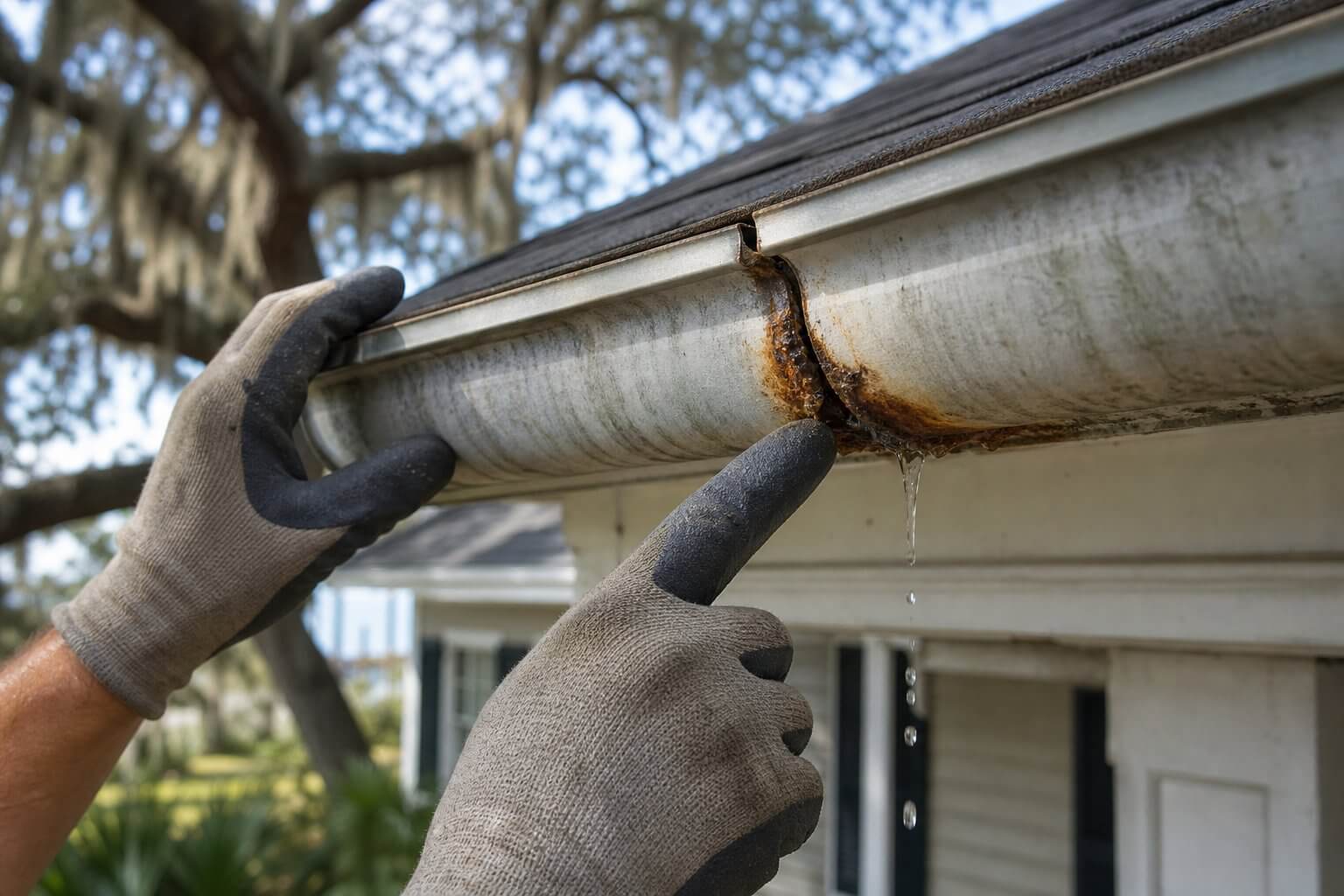
Corner miters and end caps are held together with specialized sealant. Over time, Charleston’s baking summer heat and intense UV rays cause that sealant to dry out, shrink, and crack. If water is dripping solely from a corner seam while the straight runs look pristine, a contractor can scrape away the old degraded caulk, prep the aluminum, and apply a fresh bead of high-grade marine sealant.
2. Loose Hangers and Minor Sagging
Older gutter setups used spikes and ferrules (long metal nails driven into the fascia). As wood expands and shrinks with our high Lowcountry humidity, those spikes gradually back out, leaving the gutter to sag. Swapping out loose spikes for heavy-duty, internal screw-in hidden hangers pulls the trough right back tight against your fascia and restores proper support.
3. Improper Pitch (Standing Water)
If water sits pooling in the middle of a gutter run long after a storm passes, the metal hasn't failed—it’s just lost its slope. A technician can unhook that section, adjust the pitch to roughly a 1/4-inch drop for every 10 feet of run, and re-secure it so gravity can do its job again.
4. Disconnected Downspout Elbows
Coastal wind gusts have a habit of pulling downspout elbows away from wall straps or loosening the connection at the gutter outlet. Re-securing or replacing an individual elbow section takes minimal time and brings the whole downspout back online.
When does repairing my gutters become a waste of money?
While spot fixes work wonders for isolated issues, throwing repair money at a structurally compromised system is like putting a band-aid on a blown tire. In these situations, replacing the run is the safer, smarter investment.
1. Widespread Pitting and Internal Rust
Once galvanized steel or thin aluminum starts rusting or pitting from the inside out, the metal itself has lost its structural integrity. Applying caulk over rusted metal is a temporary patch at best; water will simply find a new pinhole leak an inch down the line within a few months.
2. Severe Wood Rot Along the Fascia Board
Your gutters are only as strong as the wood supporting them. If water has been spilling over the back edge for months, the wooden fascia board behind it may be soft, rotted, or spongy. Driving new hangers into rotted wood is a losing game—the screws will just pull free during the next heavy storm. The gutters need to come down so the damaged fascia can be cut out and replaced with fresh, treated lumber.
3. Old Sectional Systems Leaking at Multiple Joints
If your home relies on store-bought sectional gutters (the kind built from 10-foot vinyl or aluminum pieces snapped together), every single seam is a failure point waiting to happen. Once three or four joints start leaking at once, repairing them piecemeal creates a domino effect. Fixing one seam shifts the expansion stress down to the next joint in line.
4. Crushed or Crimped Seamless Runs
If a fallen oak branch or a heavy ladder crushed a section of seamless gutter, the structural strength of that aluminum trough is gone for good. You can't bend crimped aluminum back perfectly smooth—it will always choke water flow and cause overflows.
Is it cheaper to repair or replace my gutters in the long run?
To figure out whether repair or replacement makes financial sense, take a look at the "tipping point."
If your system is pushing 18 to 20 years old and you're paying for a third $250 spot repair in two years, you're already burning through a chunk of what a brand-new, warranted system would cost.
- Under 10 Years Old + Solid Fascia + Isolated Leak $\rightarrow$ Spot Repair
- 15 to 20+ Years Old + Soft Fascia + Multiple Seam Leaks $\rightarrow$ Full Replacement
Keep in mind that minor ongoing leaks carry hidden costs. Rainwater dripping behind a failing gutter slowly rots your soffit boards, ruins exterior paint, and erodes soil right around your foundation. If unaddressed, this ground runoff can lead to severe crawlspace moisture and mold issues. Spending a bit more up front for a new custom seamless gutter installation often saves thousands in secondary structural repairs down the road.
How do I choose between repairing my current gutters or upgrading to seamless?
If you have an older sectional system that needs extensive work, stepping up to modern continuous seamless aluminum brings some huge long-term perks:
- Zero Middle Seams: Seamless gutters are custom-formed right in your driveway from a single continuous coil of aluminum, cut to your home’s exact dimensions. No seams along the runs means no seam leaks.
- Higher Water Capacity: Upgrading from older 5-inch troughs to high-capacity 6-inch seamless gutters increases your water volume capacity by roughly 50%, stopping cloudburst overflow in its tracks.
- Built-in Protection: Pairing a system replacement with micro-mesh gutter filtration guards keeps Loblolly pine needles and oak tassels out, taking gutter cleaning off your weekend chore list for good.
Scenario A: The Quick Corner Repair in James Island
A homeowner in an established James Island neighborhood called us about a steady drip falling right onto their front porch steps. When we inspected the roofline, the home's 6-inch seamless aluminum gutters were only seven years old, in great physical shape, and properly pitched.
The issue was nothing more than a dried-out corner miter joint. We scraped away the cracked caulk, prepped the aluminum surface, and applied commercial-grade elastomeric sealant. The whole job took less than an hour and cost a tiny fraction of what a new system would run.
Scenario B: The Worn-Out Sectional System in Goose Creek
Over in Goose Creek, a homeowner had original sectional vinyl gutters installed in the late 1990s. Water was leaking from five different seams, and several old spike fasteners had pulled completely out of soft, water-damaged fascia wood.
Rather than throwing good money after bad to patch failing joints on a dying system, the homeowner chose a full replacement. Our crew detached the old vinyl strips, replaced 12 feet of rotted fascia board, and installed brand-new 6-inch seamless aluminum gutters with heavy-duty screw hangers in a single afternoon. You can read how other Lowcountry neighbors handled similar projects on our customer reviews page.
Expert Tips from a Local Contractor
- Try the "Fascia Push Test": If you suspect wood rot behind a sagging gutter, carefully press a flathead screwdriver against the wooden board behind the trough. If the wood feels soft or gives easily, the fascia must be replaced before any gutter will hold securely.
- Look for Internal Metal Pitting: After a dry spell, look down inside your gutter trough. If you see flaking rust, orange staining, or pitted metal surfaces, the protective coating has worn off, and sealants will no longer adhere properly.
- Use the 12-Year Rule: If your aluminum system is under 12 years old, lean toward spot repairs. If it’s over 18 years old and showing multiple leaks, replacement is usually the smarter long-term investment.
- Demand Photo Proof: An honest contractor should always take clear photos or videos of the damage while up on the ladder to show you why a repair or replacement is needed before asking for your decision.
Conclusion
Deciding whether to repair or replace your gutters doesn't have to feel like a guessing game. By checking the age of your system, inspecting the fascia wood, and identifying whether leaks are isolated or widespread, you can make a practical, budget-smart choice for your home.
Taking care of your property should feel straightforward and transparent. Learn more about our team's local approach to helping Charleston homeowners protect their homes with honest, reliable service.
Unsure If Your Gutters Need a Simple Fix or a Full Upgrade? Let’s Take an Honest Look.
Not sure if that dripping corner needs a quick seal or if your fascia board needs attention? Standard Gutter is here to help homeowners across Charleston, Summerville, Mount Pleasant, West Ashley, Johns Island, and surrounding Lowcountry communities.
We provide straightforward evaluations, clear photo evidence, and honest recommendations tailored to your budget—without high-pressure sales tactics. If a simple gutter repair service is all you need, that's exactly what we'll recommend.
Call Standard Gutter today or visit us online to request your free, no-obligation roofline inspection.
Frequently Asked Questions
Can you replace just one damaged section of a seamless gutter?
Yes. Professional installers can cut out a single crushed or bent section of seamless gutter and splice in a new custom-fabricated seamless run using discrete internal couplers without tearing down the rest of your home's system.
How long do seamless aluminum gutters typically last in Charleston?
Quality heavy-gauge seamless aluminum gutters usually last 20 to 30 years in coastal South Carolina, provided they are maintained regularly and secured with stainless steel or heavy-duty coated screws that resist salt air corrosion.
Will repairing my gutters fix the wood rot behind them?
No. Repairing or resealing a gutter won't cure existing wood rot. The gutter section must be detached so the rotted fascia board can be cut out, replaced with treated lumber, and sealed before re-mounting the trough.
Can I fix a leaking gutter seam myself with standard hardware store silicone?
Standard store-bought silicone caulk degrades quickly when exposed to intense Lowcountry UV rays and standing water. Professional contractors use high-grade elastomeric or polyurethane sealants specifically formulated to bond with aluminum and expand with temperature changes.
What causes a gutter to sag even when it isn't clogged?
Gutters usually sag because old-style spike fasteners have pulled out of the fascia, bracket spacing was too wide during initial installation, or the wood fascia behind the gutter has softened from long-term moisture exposure.
Is it necessary to replace downspouts when replacing gutters?
While undamaged downspouts can sometimes be reused, replacing them alongside your gutters ensures matching colors, correct sizing (such as stepping up to oversized 3x4-inch outlets), and a fresh manufacturer warranty across the whole system.
How much does a typical gutter repair cost compared to full replacement?
Minor repairs like resealing a corner miter or re-securing loose hangers typically cost a small fraction of a full replacement. However, if an old system requires multiple seam repairs, fascia replacement, and new downspouts, replacement becomes the more economical choice.
Why do my gutters leak at the seams during heavy rain?
Seams leak when old sealant dries out, cracks, or loses its adhesive bond due to thermal expansion. During heavy storms, high water volume finds these micro-cracks and drips through the joint.
Will installing new gutters increase my home's resale value?
Yes. New seamless gutters improve curb appeal and provide critical home inspector reassurance by demonstrating that roofline drainage is actively protecting the foundation, siding, and crawlspace from water damage.
How long does a typical gutter repair or replacement job take?
Most minor repairs take between 1 and 2 hours to complete. A complete residential seamless gutter replacement—including old system removal and fascia repairs—is typically finished in a single day for a standard home.